Monday, December 14, 2009

Artist Entry: Niko Princen

Values Questionare


Art has a very long and textured history of commenting on commercialism and capitalism. Princen is making no exception here. But rather than making assumptions on how people feel about commercialism  and its connection with art. What he has done is scanned through the statements of several prominent companies picking out key words about what they believe. He then put them all in survey and asks the user to choose at least one that they feel best describes the word art.

He then provides the user with the companies whose philosophies best match your answers. He is trying to gather as much information as possible and analyze the results. Eventually he hopes to draw conclusions from the results and considers the entire piece a work in progress.

I find the project to be very interesting. It covers very rich subject matter, but in a very different way from anything I have seen. It isn't trying to teach you an opinion, but it asks you to draw your own conclusions based on information others have provided you. I'm very curious to see what conclusions the artist draws.

Artist Entry:Cody Trepte


This goes hand in hand with my previous artists entry for me. Binary is a very simple concept of 1's and 0's. Or when it comes down to computing machinery, on and off. But rather than approaching binary mathematically or mechanically like most people usually do, he approaches it with a drastically different material.

By using cross-stitching he creates a juxtaposition that forces the viewer to consider why he chose such an old-fashioned way of expression and communication. But rather than taking as strong of a philosophical stance as the Open Source Embroidery, Terpte applies pure humor to the collection. Each piece is a literal binary translation of the title. But the titles are all references to Computer Science and are progressively more humorous. The Ghost of Alan Turing and Can technology be understood outside itself? are both humorous, but also thought provoking or require some digging to find out who they reference.

I find this collection extremely funny. I like the cross-stitching and the titles are very engaging. They could easily loose an audience that isn't familiar with the terms, but it makes people want to look up the information as well.

Sunday, December 13, 2009

Artist Entry: Ele Carpenter

Open Source Embroidery

At first coding and embroidery seem like they have absolutely nothing to do with eachother. Code is processed by machine. It is strict, it is functional, and it is very new. Embroidery is very old, it is an oral tradition, and it is purely decorative. But code and embroidery have very interesting similarities, as well and juxtapositions. Programming is a male dominated activity in which one produces hundreds and thousands of tiny snippets of code to build a larger program. Embroidery is dominated by women and is constructed by hundreds and thousands of tiny stitches to build a larger image. The principles of Open Source coding also resonate with embroidery - "principles of 'freedom' to create, modify and distribute, within the cultural and economic constraints of capitalism".

What the Open Source Embroidery project does is to shed light on the unique connections between the two ideas. They exhibit dozens of textile works of art that depict open source software and ideas that resonate with their materials. Knitted telnet lines on a knit computer, woven network diagrams, quilted HTML color charts, cross-stiched code, and more line their exhibit halls prompting discussion and further exploration of just how similar embroidery and open source really are.

I think that these exhibits are extraordinarily successful. Both really do rely on very similar principles. Even if you look at the very simplest example they provide the connection is clear: the first programmer, and the first program. Lady Ada Lovelace wrote the first program for Charles Babbage's theoretical Analytical Machine, and as he said: "the Analytical Engine weaves algebraical patterns just as the Jaquard Loom weaves flowers and leaves." The Jaquard Loom was the first device that used punch card programming - a similar system to the cards that FORTRAN used that still exist today.

Artist Entry: Sebastian Schmieg

The Last Midi Background


The 1990s were an impressive decade for technology. The personal computer was finally a reality, and with the internet becoming faster and more impressive each month, every wanted one. And with the internet came advances in web browsers and HTML. In the mid to late 1990s HTML code was growing faster than standards could control them, and each and every browser had new flashier tags like marquee, blink, and the dreaded embedded MIDI files. Any amateur could make a webpage now, and odds are it would be painful on your eyes and ears.

Fortunately people have begun to realize that if a user can't stand to look at your page, no one will visit it. Sleek, modern, and easy to use are the keys to a successful website today. Unfortunately, there are remnants of the old internet still floating around. Scmieg has found several webpages that still engage in the horrific practice of subjecting their visitors to embedded MIDIs. He has taken these webpages and engaged in a good bit of appropriation to create a webpage that embodies these old practices. He has taken the music and several images directly from his sources then, on a familiarly awkward background, scrolls the images across the page, plays the music, and provides the information on the webpage it was all taken from in appropriately painful to read text.

Overall I find this piece to be a hilarious commentary on how far we have come in terms of web development. Everything we see in his piece was (unfortunately) once a standard online, and is now (fortunately) virtually extinct from most common webpages. Templates, styling, and an appreciation of standards have reined in the wild days of awkwardly positioned neon headers, but Schmieg's piece reminds us how far we have come, and why we never want to go back.

Saturday, December 12, 2009

Artist Entry: Luc Courchesne

Landscape 1


In 1997 virtual reality still seemed like pure science fiction. Even if you could find a virtual environment somewhere, it was usually very expensive, and this has been true up until very recently. But while most people were daydreaming about virtual reality through Star Trek's holodecks, Luc Courchesne was creating art from them. He took four screens, four touch screen computers (also extremely impressive at that point),  microphones, motion detectors, and video disk players and made a virtual room.

The room displays video taken from a park, events, and virtual characters that the user can interact with. The goal of this piece is to explore a landscape not simply as the image and feel of the space, but to push the understanding of the space and its personality. He wants the user to fully explore the environment, the stories, the people, and the movement by pushing the envelope of the experience.

I find this piece to be personally fascinating. Virtual environments are not easy to program, and despite the fact that the technology is cheaper and better now than it was 12 years ago it's still very difficult. And yet Courschesne did an excellent job exploring this idea of a landscape. What I would love to see is an updated version of this. With modern technology, he could project the landscape onto a circular, multi-touch paneled room, then by using technology similar to the Wii Fit Balance Board he could allow the user to physically explore the room by walking from one end to the other. Fitted with strategic speakers, mics, and even fans or heat sources, he could take the idea of exploring space to a whole new level of interaction.


Monday, November 9, 2009

Artist Entry: Marcos Weskamp

social circles


One of the most useful, if not obnoxious, social networking tools on the internet is the mailing list. Through these we get helpful technical support, free stuff people are looking to get rid of, information on the whereabouts of old classmates, and of course massive quantities of spam. What's interesting about all of these is that certain people are much more vocal or noticeable than others. Either they're involved in almost every thread that pops up, or they're just obnoxiously vocal. Whichever one, you're bound to notice and recognize them above most other participants and lurkers in the list.

What Weskamp has done is to map several mailing list that he has encountered. He has written a program that visually represents each member of the list and how many posts they have made, with whom they have interacted, and which threads they have been involved in. The result is that each mailing list creates unique patterns. You start to pick out which lists are moderated, who is the driving force on the list, and what kind of subjects are being discussed without having to filter through hundreds ore even thousands of e-mails.

Overall I find the piece to be fairly successful. While most lists have online archives, it is really difficult to know how active or useful a mailing list is to you without extensive digging. Weskamp's work succeeds spectacularly at being somewhat useful to a user, as well as being thought provoking and interesting. Looking at one map in a single view may not be so interesting, but the dynamic aspect of the piece brings out its strengths. By allowing the user to browse through various lists and explore the information in several different views he is providing the user a more complete and intriguing perspective to the behavior of mailing lists.

Monday, October 19, 2009

Artist Entry: Alexei Shulgin

"Form"


A significant portion of how we interact with the web is through forms. We click buttons, we fill out text boxes, we take polls, we select, deselect, fill in, and move on. What Alexei Shulgin has done is break these forms out of any context beyond the object itself and a few prompts. He lets the buttons and text fields take on a life of their own - almost like building blocks for the new structure.

At first glance the work seems haphazard and pointless. But the object of the piece becomes clear about two clicks into the page. It's addicting. You keep following each button, jumping around the page to find something new, then trying to find your way back to where you were to try and find an unexplored branch of the page. This one page manages to sum up the addictiveness of our web browsing habits - we follow one link, one form and keep clicking and backtracking until we have to go, get ourselves stuck in a corner, get bored, or occasionally leave by choice.

I really enjoyed this piece, I found that the more I navigated through the site the more I thought about what exactly I was doing and how similar this was to my usual habits on the web. I was also really entertained and impressed by how the forms we've come to think of as insignificant and purely functional pieces of a web browser were turned into such whimsical creations. He turned tick boxes, radio boxes, text fields, and buttons into animations, games, geometric designs, and words. The reveal of what he has done is quite impressive as well - you have no idea what you've gotten into when you click that first button.

Wednesday, October 14, 2009

Artist Entry: Jessica Ivins

Retrotype


It is a major stereotype that video games are the domain of adolescent boys and young men. Up until very recently this is a stereotype that has been very solidly based in fact. Only in the last few years and with the introduction of Nintendo's Wii system have major game developers realized that the market for video games went much further than this demographic. And not only is the primary market for video games young men, but those developing the games are also primarily men. This may seem like a broad generalization, but Computer Science and game development are both very dominantly male workplaces, and unfortunately, the games produced in this kind of stereotype ruled world produced very skewed female characters.

What Ivins has done in her work is to very pointedly show the user how women have been portrayed in mainstream video games over the last forty years. On the main page there is a timeline with a graphical representation of the prototype female character from that block of time. When you enter the program, she has you type in your birth year, then allows you to "customize" your character by changing the basic colors of the image. Finally she show the character in its video game environment, and gives you a summary of how she chose that character based on popular video games of the time, as well as a short history of the character's role in the game.

Overall I find her work very successful. Perhaps I am biased because of my major, but as the only woman in the game design course offered on campus I completely relate to this. And while the entire work is a commentary on women in games, it isn't so overtly feminist that it looses its impact to all but the fringes. It's very personalized, and very easily and effectively opens up the discussion about video games and how they have and haven't changed since the 1970s. My only critical comments about the piece would be that she could have pushed the history and context of the pieces more, or pushed for the user to be more attached to the prototype so that when her role in the game was revealed it would feel more personal. Another choice I don't necessarily agree with is showing the timeline at the beginning of the user's interaction, rather than the end. The way it's laid out the user knows what is ahead and nothing other than the text at the end is really unveiled.

Tuesday, October 6, 2009

Artist Entry: Brian Piana

"Ellsworth Kelly Hacked My Twitter"


Piana, like many other digital artists, is commenting on micro-blogging and specifically the popular site Twitter. What he has done is to take the icons and reduced them to their dominant color, then used code to automatically update the artwork in real time. Much like the work of Ellsworth Kelly that the title references, there is a distinct set of rules to how the squares are placed on the page. The most recent post is in the top left corner, while the oldest is in the top right. And the size is not static, but also based on rules. The margins always stay the same, no matter what the size of the window is, and the number of squares adjusts to obey this rule.

This makes Pina's piece interesting on several levels. The most obvious is the commentary on micro-blogging, and to me it almost seems like the tweets themselves have no material meaning in his work, but that as a collective whole they create something that is truly interesting. Another less immediate commentary to me is the link to Kelly. Much like Ethan Ham's work that I discussed in my last post, the title creates and interesting link to art history and immediately associates the work with rules, order, and minimalism.

Over all I feel that it is a very successful merging of both the social and historical commentary. I feel like this is also a very successful bridge between traditional mediums and digital art as being a legitimate artistic medium. By bringing in a strong historical reference that can't be ignored, this piece distinguishes itself from the one-dimensional digital creations that are ubiquitous around the web today.

Monday, September 21, 2009

Artist Entry: Ethan Ham


The Small Glass (after Duchamp)


Ethan Ham produced this rather interesting 'accidental' take on Duchamp's "Small Glass".  The iPhone itself is a working iPhone that was accidentally dropped, creating the shatter along the bottom of the device. Having worked at Apple and seen many phones come in looking exactly like this, I find the direct correlation to Duchamp's work very interesting.

This idea of non-art artwork is taken even farther with the fact that the piece is still functional. Despite the sprawling crack along the screen, it is still a completely functional device. To take the connection to Duchamp even further, Ham replaced the wallpaper of the phone with Duchamp's "The Bride Stripped Bare by Her Bachelors, Even".

The result of this very deliberate connection to Duchamp is to subject this - and other similar pieces of technology - to many layers of questions regarding its validity as a piece of art, and its significance in our daily lives. It also, amusingly, strikes me as comparing the iPhone to R.Mutt's urinal as a culturally important contraption.

Monday, September 14, 2009

Artist Entry: Jason Sloan

[cloud.s]v1.1

http://cloud-s.net/
What Sloan has done is to take the micro-blogging site Twitter and pull posts with the word 'cloud' on to a webpage as links arranged to take the form of a cloud. The page initially loads as a simple blue gradient similar to a clear sky. Then the text begins to appear in varying size and spacing across the page, stretching it out so you can scroll back through it. But instead of just having the text, each line links directly back to the original tweet it came from.
One of the fascinating aspects of this is that not only is the content generated by internet users, but it gives each and every author credit. In an environment where taking 140 characters or less without giving proper credit is (unfortunately) common practice, this is really pretty neat. It gives the work a much more interactive and explorative nature. Another interesting thing is that in network diagrams the internet is almost always depicted as a cloud. Also, cloud computing is a term that has grown out of our tendency to keep more and more of out documents on the web, so that eventually all we will need is machine with basic hardware and just enough disk space for an operating system.
So I think that this piece is very successful because it is on one hand so simplistic you can't avoid talking about the core of the piece (the internet and blogging), but it is also very complex with its links and the layers of meaning from the name and format. The only thing I can think of that could make this piece more dynamic would be the inclusion of more  blogging and micro blogging sites, but even that may over-crowd the work.

Wednesday, September 9, 2009

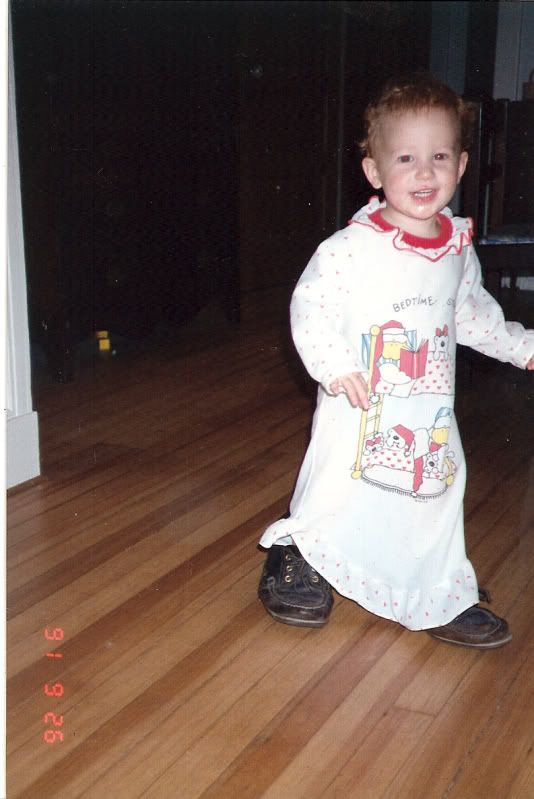
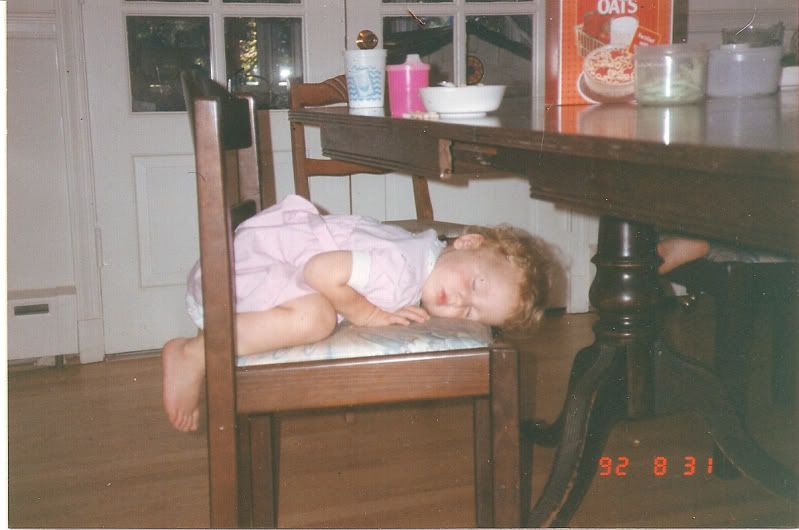
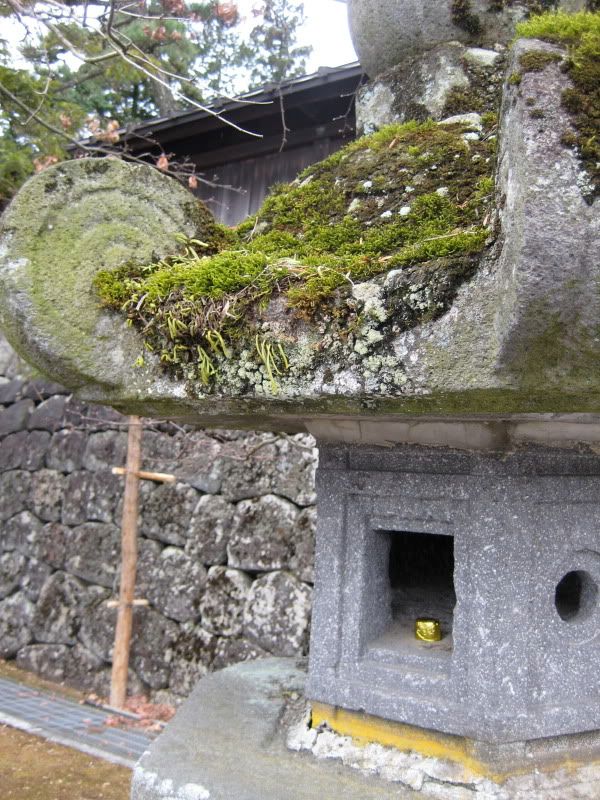
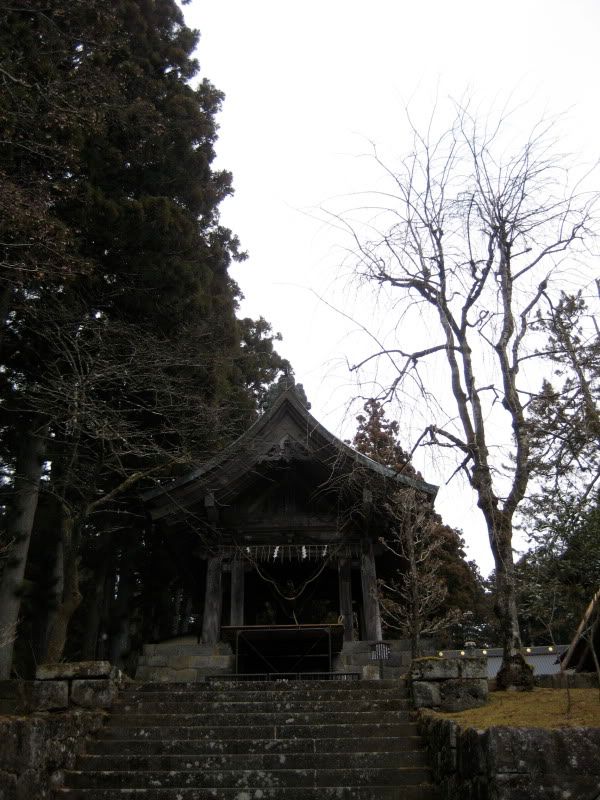
Okay, so here some images I'm hoping to clean up in class:
My sister
My Mother
A barn in New Hampshire
         
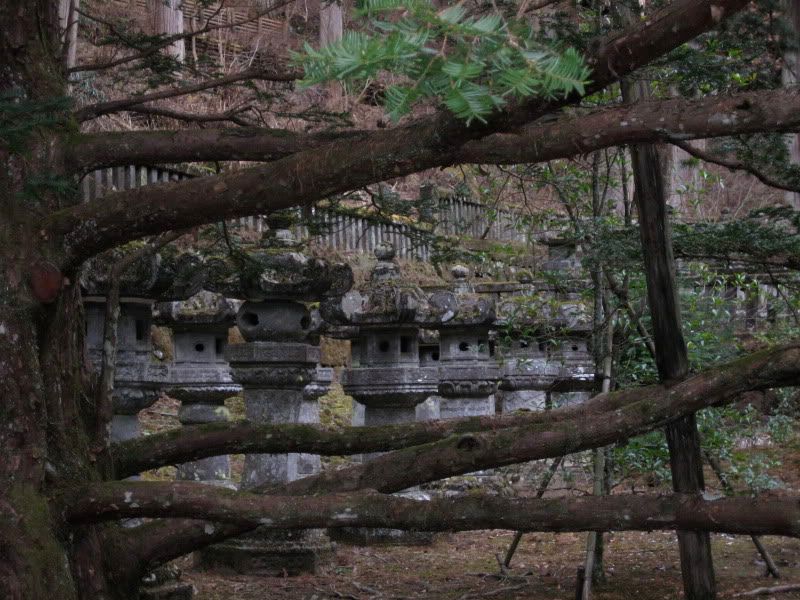
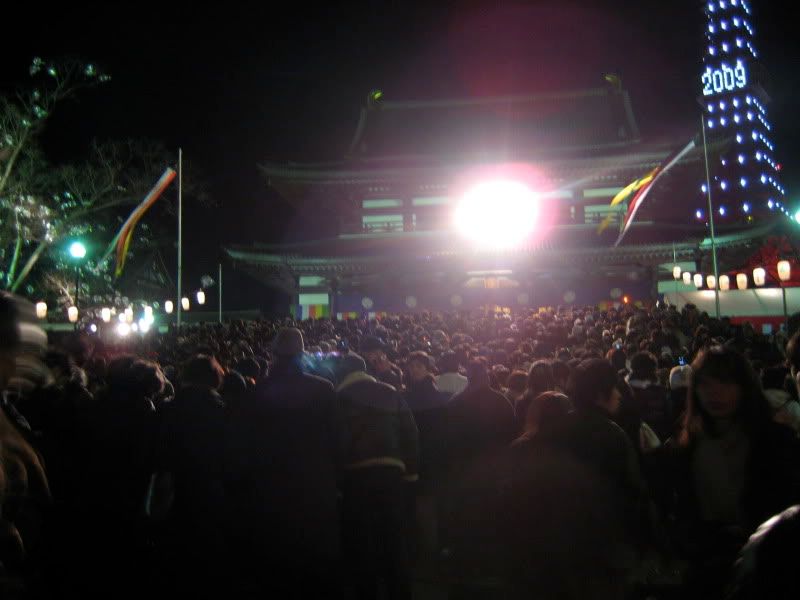
And several pictures from Japan

Monday, September 7, 2009

Artist Entry: Aaron Higgins

comp3(terra)


Aaron Higgins approaches his digital art in a way that I find absolutely fascinating. He considers the movement and layering of film the same way he would the movement of paint around a canvas. However, using video he can create a time-lapse painting that shows the evolution of the image throughout its creation. This takes fundamental concepts from traditional oil painting and provides them with new and dimension.


Overall I feel that this piece exemplifies Higgins ideas beautifully. In each frame of his video I can can see how the image could be a brilliant oil painting. What he has done is replaced the stroke of the brush with a very fluid and gaseous movement of mass and color. The sound gives the piece and interesting sense of scale and despite the small size of the video on the screen, it makes the piece feel as if it has an almost planetary scale.

Tuesday, September 1, 2009

This is my blog for Intro to Digital Imaging at St. Mary's College of Maryland.

I have dabbled with digital art for the last few years, and am looking forward to learning more. Mostly I have worked with some minor photo editing in Photoshop Elements 3 and Aperture, and I have done some digital painting through some online programs, Photoshop Elements 3, and ArtRage 2. Some of the tools I'm really looking forward to familiarizing myself with are 3D modeling and Illustrator.